Foundation for our Future: Why Affordable Housing Week Matters in Wake County
Every May, communities across the country pause to take stock of one of the most urgent challenges of our time: the housing affordability crisis. Here in Wake County, that pause hits close to home.
Wake County currently faces a gap of more than 53,000 housing units, a number projected to swell to 125,000 over the next five years. Rising construction costs, higher mortgage rates, and one of the fastest-growing populations in the Southeast have created an extremely stressful time for families in our community.
Affordable Housing Awareness Week is our moment to raise our voices, share our stories, and remind our community why this work matters — and why it can't wait.
What Is a Community Land Trust?
RALT is Wake County's first and only community land trust — a model built on a simple but powerful idea: when land is held in trust permanently, the homes on it can stay affordable forever.
Here's how it works: RALT acquires land and sells homes at below-market prices to income-qualifying buyers. The homeowner owns their house, but RALT retains ownership of the land through a 99-year, inheritable ground lease. When the homeowner eventually sells, they keep a portion of the equity they've built — but agree to pass the home on at an affordable price to the next qualifying family. One investment. Generations of impact.
It's a fundamentally different approach from traditional affordable housing programs, which often lose their affordability over time. With the land trust model, affordability doesn't expire.
A Dream Realized
The power of this model is best understood through the people it serves. Mr. Watson, a Raleigh maintenance supervisor and freelance handyman, spent his entire adult life as a renter — much of it in public housing. He had assumed homeownership simply wasn't in the cards for him. Then, at 62, he became RALT's first homeowner, purchasing a 1,000-square-foot home on Southgate Drive for just under $200,000. His monthly mortgage payment: around $850. He had been paying $900 to rent a far less stable situation.
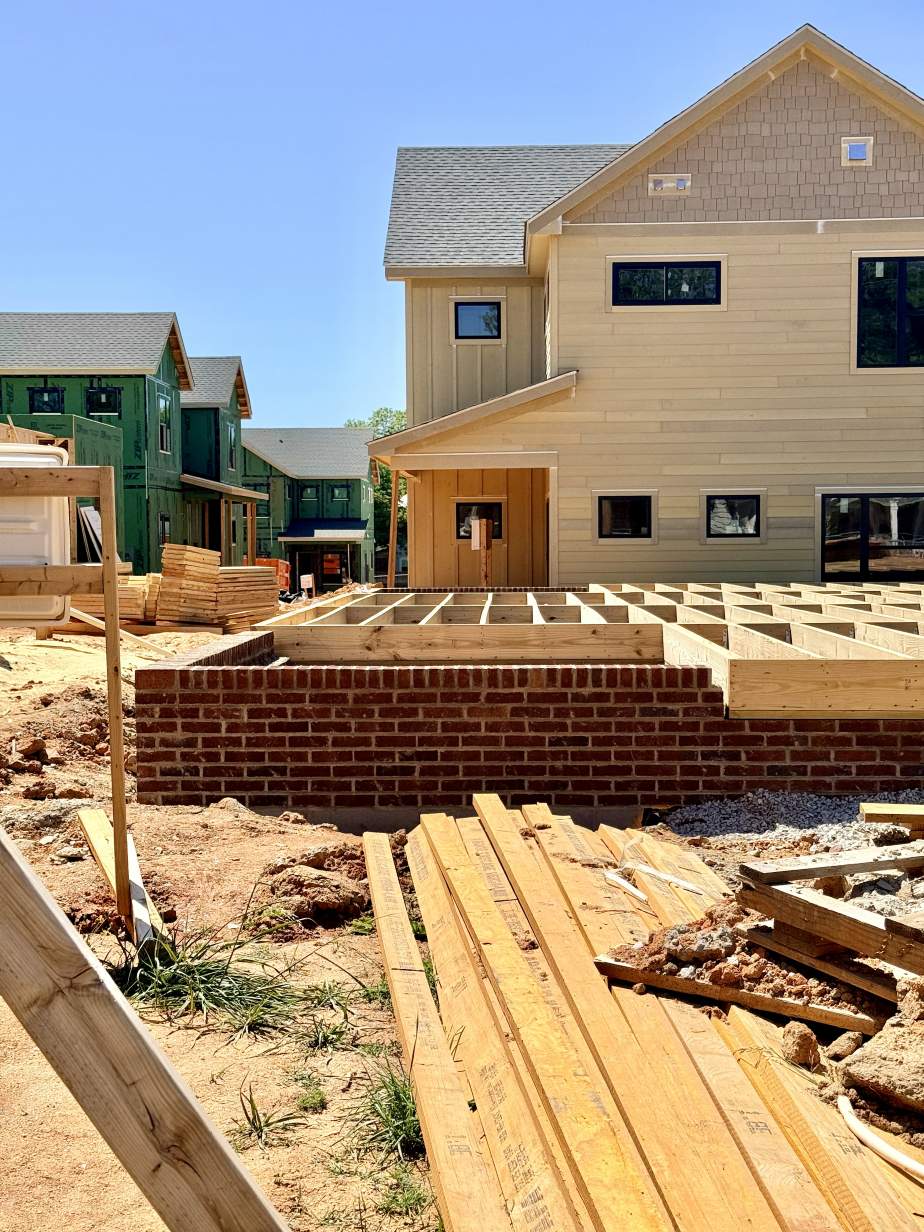
Cottages of Idlewild in downtown Raleigh
"I always wanted to be a homeowner but never thought I could be one because of my age," Watson said. His story is a reminder that the path to homeownership shouldn't close as people get older, earn less, or simply don't fit the profile the traditional market rewards.
What's Coming: The Cottages of Idlewild
Last Fall, RALT broke ground on its most ambitious project yet — The Cottages of Idlewild, an 18-home development located just a mile northeast of downtown Raleigh, in the historic Idlewild neighborhood.
The development will include 14 for-sale homes for first-time buyers and four rental units, serving households earning between 30% and 80% of the area median income. Partners include Wake County, City of Raleigh, the NC Housing Finance Agency, Coastal Credit Union, Wells Fargo Foundation, Haven Design Build, and Raleigh Raised Development — a firm co-founded by NCCU men's basketball coach LeVelle Moton, who grew up steps from the project site.
At the groundbreaking, Moton shared what it meant to be building affordable homes in the neighborhood where his grandmother once lived. It was a moment that captured everything the community land trust model is about: roots, legacy, and the belief that longtime residents deserve to remain in the communities that shaped them.
Why This Week Matters
Gentrification is not an abstraction in Raleigh or Wake County. It shows up in rising property taxes that push out long-term renters, in neighborhoods that transform faster than their residents can keep up, and in working families who commute hours each day because they simply can't afford to live near where they work.
RALT's model is one answer — not the only one, but a proven one. And this week is a chance to make sure more people know it exists.
You can help:
Learn more about RALT and the community land trust model at ralt.org
Share this post to spread awareness in your network
Donate or volunteer to support RALT's growing work across Wake County
Talk to your neighbors and elected officials about policies that protect and expand affordable housing
Everyone deserves a stable, affordable place to call home, not just for one generation, but for generations to come. That's what we're building in Wake County. Join us.